
Spades
YouXi GamesCard
4.7368.00 Reviews
- Version
- 0.0.89
- Installs
- 100.00K
- Age Rating
- Everyone
Screenshots
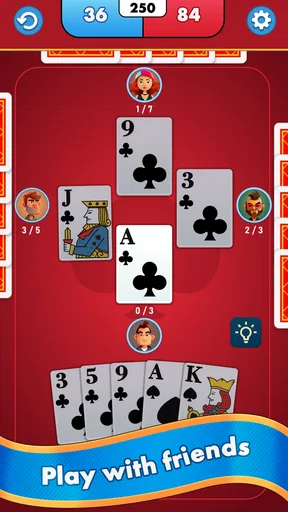
Our Review of Spades
 Analysis by Appyee
I approached Spades expecting a straightforward card game, and that is exactly where its appeal starts. Developed by YouXi Games, this free card title focuses on the familiar Spades format rather than trying to bury the rules under a large collection of unrelated modes. After spending time with it, I found the experience easiest to appreciate in short, relaxed sessions: a few hands while waiting, a quiet match before bed, or a longer run when I want something thoughtful without the pressure of a fast action game.
The game has a clean, traditional identity. Its store summary calls it a classic Spades card game, but my impression is more specific: it works best as a compact digital table for players who already understand the basic rhythm of bidding, following suit, and managing the trump suit. Newcomers can still learn from it, although the experience feels aimed more at people who want to play than at people looking for an elaborate tutorial adventure.
What makes the first impression pleasant is the lack of unnecessary ceremony. I can get into a hand quickly, read the table, and start making decisions. That simplicity is also the main limitation. If you want a card app packed with social rooms, dramatic presentation, or a huge variety of rule sets, this is unlikely to satisfy you. If you want a recognizable Spades session that stays focused, it makes a convincing case.
A quiet card table with its own visual language
I like how this section treats the table’s understated look as part of the play rather than decoration. I’ll focus on how that visual restraint can make it easier to follow suits and think through a hand, while also considering when a quieter presentation may feel too plain. That distinction sets up a closer look at what the atmosphere adds—and what it deliberately leaves out.
The setting supports concentration instead of competing with it
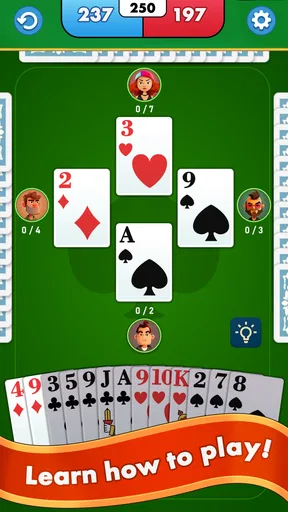
The visual direction suits the game’s subject. Spades is built around reading cards and planning several tricks ahead, so a restrained table presentation is more useful than a busy animated environment. I found the overall mood easier to settle into because the cards remain the important objects on screen. The setting suggests a familiar tabletop rather than an invented fantasy world, and that choice keeps the game grounded in the social tradition of the card game.
That may sound modest, but it matters. In many mobile card games, decorative effects can make every action feel louder than it needs to be. Here, the visual language works best when it gives me enough space to think about the hand. I can focus on the cards already played, the suit that has been led, and whether my earlier bid still looks realistic. The atmosphere comes from the steady table routine, not from visual spectacle.
The art direction also affects how approachable the game feels. A player who knows standard Spades can understand the scene without learning a new fictional setting or a complicated interface metaphor. The cards communicate the state of play directly. For someone introducing the game to a casual player, that familiarity is a real strength.
Where the presentation helps, and where it stays limited
The benefit of this restrained approach is clarity. I do not feel pushed to rush through a hand because the screen is constantly demanding attention. The trade-off is that the presentation may feel plain to players who expect a strong personality from a modern mobile game. There is no need to mistake simplicity for depth: the decisions come from Spades itself, not from a large audiovisual layer wrapped around it.
This is also why I would not choose it as a showcase game for a new phone. It is better understood as a dependable card table than as a visual demonstration. The setting creates a coherent playable mood, but it does so quietly. Players who enjoy calm interfaces will probably appreciate that restraint more than players who want expressive characters, elaborate environments, or a sense of constant progression.
Sound and the pace of a hand
The sound design is most successful when it supports the rhythm of play instead of trying to become the main event. A Spades hand naturally has pauses: I consider a bid, watch another card appear, decide whether to protect a high card, and wait to see how the trick develops. A good mobile presentation should respect those pauses, and this game’s overall feel is suited to that measured tempo.
I like that the experience can function as a low-pressure background activity. It does not need the intensity of a competitive action game to hold my attention. The tension arrives from uncertainty inside the hand: perhaps I overestimated my side’s strength, or perhaps an opponent has forced me to use a valuable spade earlier than planned. That gradual tension gives the game its sound and pacing identity.
There is a practical consequence here. Spades is comfortable for players who prefer to play with the volume low or off, because the core information is visual and strategic. On the other hand, anyone looking for a highly dramatic audio experience may find the mood too understated. The game’s personality comes from the timing of decisions, not from a cinematic soundtrack or theatrical presentation.
Why the slower rhythm is mechanically useful
The measured pace gives me room to think about more than the current trick. Before playing, I can ask what suits have already been exhausted, whether a likely winner should be saved, and how many tricks my partner may still be able to contribute. That is where the atmosphere and mechanics connect: the calm presentation encourages the kind of patient observation that Spades rewards.
A useful habit is to treat each hand as a sequence of changing information rather than as a set of isolated plays. I pay attention to who fails to follow a suit, because that can reveal where spades may become dangerous. I also reconsider the original bid after the first few tricks. A strong start does not guarantee a comfortable finish, and a weak-looking hand can sometimes improve when the distribution becomes clearer.
This is one of the game’s less obvious strengths. The relaxed pacing does not make the strategy shallow. Instead, it leaves enough mental space for players to notice patterns. The limitation is that this value depends on enjoying traditional card reasoning. If you want constant rewards or quick reflex challenges, the deliberate tempo may feel slow rather than thoughtful.
How the rules fit the mobile format
As a card game in the classic Spades category, it translates naturally to a phone or tablet. A complete hand can fit into a short break, while several hands can become a longer evening activity. I find that flexibility more useful than a forced session structure. I can stop after one hand when something interrupts me, or continue when the table is giving me interesting decisions.
The familiar rules also lower the learning barrier for experienced players. I do not have to learn a new deck, a fictional scoring system, or a complex collection of cards before the strategy becomes meaningful. The important questions are the traditional ones: how ambitious should my bid be, when should I spend a spade, and how can I support the partnership without exposing too much information?
For a new player, the first challenge is understanding why a seemingly winning card may be better held back. Spades is not simply about playing the highest card available. Timing, suit distribution, and the relationship between the bid and the tricks actually taken all matter. I recommend beginners start conservatively, observe which suits opponents can no longer follow, and avoid treating every high card as an automatic winner.
Small decisions that improve everyday play
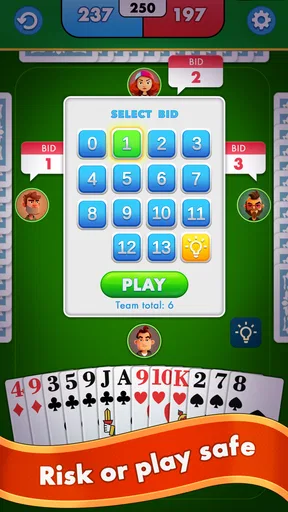
My most useful adjustment was to separate bidding confidence from card excitement. A hand with several high cards can still be awkward if the suits are poorly distributed, while a less impressive hand may have value because it can help control the timing of the trump suit. I try to imagine the likely shape of the whole hand before committing to an optimistic number.
Another practical tip is to remember failed suits as carefully as winning tricks. When a player cannot follow the led suit, that information can be more valuable than the card they just played. It tells me something about future control and helps me decide whether to lead that suit again or force a different response.
I also avoid spending a powerful spade merely to win a trick that does not improve the hand. Sometimes taking a trick early creates a later problem, especially when the bid requires careful management rather than maximum capture. Holding back can preserve control for the moment when an opponent’s high card would otherwise take an important trick.
These habits make the game more satisfying over time, but they also show who may not enjoy it. Players who dislike partnership uncertainty, calculated risk, or the occasional bad deal may become frustrated. The app provides a focused place to play Spades; it cannot remove the inherent swings of a card game.
Use cases beyond casual boredom
I see three especially good situations for this game. The first is a short waiting period when I want something more engaging than scrolling but less demanding than a full game. The second is a quiet routine, such as playing a few hands with coffee or winding down at night. The third is practice: I can use individual sessions to work on bidding discipline and card tracking without needing a physical deck or a group ready to play.
It is also a useful bridge for someone who knows another trick-taking game but has not played much Spades. The basic card language feels familiar, yet the trump management and partnership decisions create enough difference to reward attention. I would not present it as a substitute for playing with friends around a real table, but it can keep those instincts active between gatherings.
For a family member who wants an accessible card game, the Everyone content rating makes the app an easy candidate to consider. The age positioning does not mean every child will understand the strategy immediately, but it does fit the game’s ordinary, non-violent card-table character. The main question is patience, not mature content.
Free access and the question of spending
The game is free to download, which makes trying the basic experience straightforward. In-app purchases range from $1.99 to $9.99 per item. I would approach those purchases as optional conveniences rather than as part of the reason to play. The core appeal is the hand itself, so I would only spend if an offered item genuinely improves my personal routine and not because I felt pressured to keep up.
This is an important distinction for a simple card title. A free entry point is valuable when it lets me decide whether the pacing and rules suit me before spending anything. At the same time, players who prefer a completely minimal, purchase-free experience should pay attention to how they feel about the available extras. The best way to use the app is to set a personal boundary in advance and judge it by the quality of its card play, not by optional additions.
Device compatibility and practical expectations
The current version is 0.0.89, and the game supports devices running Android 6.0 or later. That broad compatibility makes it a reasonable option for people who do not own a recent phone. I still recommend keeping expectations realistic: compatibility does not turn a traditional card game into a feature-heavy platform. Its value is that the central experience can fit comfortably on a wide range of everyday devices.
The app has passed the early discovery stage with over one hundred thousand installs, and its average rating is 4.7 from around 8.8 thousand ratings. I read that as a sign that the focused format is landing well with many players, while remembering that a strong average cannot predict whether its slower, traditional style will match my own preferences. The review volume also suggests that it is not an obscure experiment with no established audience.
How it compares with the usual alternatives
Compared with a physical deck, the app wins on convenience. I do not need three other players, a table, score paper, or someone willing to shuffle. It is ready when I have a few minutes. The physical version still wins for conversation, visible social cues, and the satisfaction of handling real cards, so I see this as a companion rather than a replacement.
Compared with broad card-game collections, this title benefits from focus. A collection may offer more variety, but that can also mean more menus, currencies, tutorials, and distractions between hands. Here, the identity is narrower and easier to understand. The trade-off is obvious: if I want solitaire, poker, or several regional variations in one place, a larger collection will be more practical.
Compared with a live multiplayer table, a focused digital opponent experience is more predictable and convenient, but it may not provide the same emotional texture as playing with friends. Partnership communication, table talk, and the ability to read a real person are central to the social version of Spades. I would choose this app for solo practice and immediate access, and choose a live table when the social element matters most.
Who should install it, and who should skip it
I recommend Spades to players who already enjoy trick-taking games, want a calm mobile card session, or need a simple way to practice bidding and card management. It is particularly suitable for people who value a clear table, familiar rules, and a pace that leaves room for thought. The free starting point makes it easy to test without treating the download as a major commitment.
I would skip it if my priority were flashy art, a large social community, rapid competitive action, or a broad catalogue of unrelated card games. I would also hesitate if I found partnership randomness irritating or if I wanted every session to feel dramatically different. This is a focused Spades experience, and its strengths come directly from that narrow purpose.
After using it, my final view is favorable but measured. The strongest part of Spades is the way its quiet presentation protects the thinking time that makes the card game enjoyable. The setting, sound, and pacing do not overwhelm the mechanics; they give the bidding and trick management room to breathe. That makes it easy to return to, especially in ordinary moments when I want a game that asks for attention without demanding all of it.
It is not the most ambitious card app, and that is precisely why it can work. YouXi Games has kept the focus on the recognizable structure of Spades, with enough room for careful decisions and enough simplicity for a quick session. The app is free, rated for Everyone, and available in a current version that supports Android 6.0 and later. For me, it earns a place as a dependable digital card table rather than a replacement for every other way of playing.
If I were recommending it to a friend, I would say this: install it when you want traditional Spades without setup, start by bidding more cautiously than your excitement suggests, and give the slower rhythm a chance. If you are looking for spectacle or a deep collection of modes, choose something broader. If you want a coherent, low-pressure card game where the mood serves the decisions, Spades is an easy one to try.
Verdict
Strengths of Spades
- Classic trick-taking gameplay is easy to learn but offers plenty of strategic depth.
- Online multiplayer makes it easy to find opponents at different skill levels.
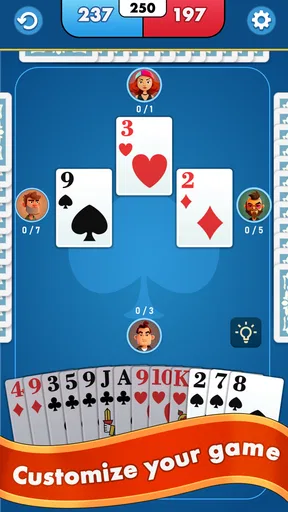
- Customizable rules support different Spades variations and table preferences.
- Clear card layouts keep suits, bids, and tricks easy to follow.
- Short matches work well for quick gaming sessions on mobile devices.
Limitations of Spades
- Match quality can vary when paired with inexperienced or inactive players.
- Some features or tables may require an internet connection to function.
- Ads may interrupt play, depending on the version and subscription options.
- Random card deals can occasionally make matches feel unbalanced.
- Advanced players may find the available modes limited over time.
Similar Picks in This Category
View All
Solitaire - Classic Card Games
MobilityWare4.6

UNO!™
Mattel163 Limited4.3

Spider Solitaire: Card Games
MobilityWare4.6

Solitaire.com - Classic Cards
Tripledot Studios Limited4.7

Plants vs. Zombies™ Heroes
ELECTRONIC ARTS4.1

Hearthstone
Blizzard Entertainment, Inc.4.1
Frequently Asked Questions
What is Spades, and how is the game played?
Spades is a classic trick-taking card game for four players, usually divided into two teams. The goal is to predict how many tricks your team will win and then meet that bid during the round. Spades are always trump, meaning they can beat cards from any other suit. The app generally handles dealing, scoring, and turn order automatically, making it easier for beginners to learn the rules while playing.
Can I play Spades offline or without creating an account?
Many versions of Spades include offline play against computer-controlled opponents, although the exact options can vary depending on the edition and device. Offline mode is useful when you are traveling or have limited internet access. Some features, such as online multiplayer, leaderboards, cloud saves, or social functions, may require an account or an active connection, so it is worth checking the app’s sign-in requirements before downloading.
Does Spades offer online multiplayer with friends?
Spades commonly includes online multiplayer, allowing you to compete against friends or other players around the world. Depending on the version, you may be able to invite contacts, join public matches, or use private rooms. Online games require a stable internet connection, and matchmaking quality can depend on the active player base. Some multiplayer features may also be restricted by advertisements, in-app purchases, or account requirements.
Is Spades suitable for beginners who have never played before?
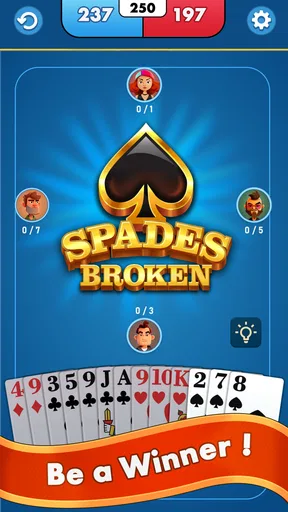
Yes, Spades can be suitable for new players, especially when the app provides tutorials, rule explanations, practice rounds, or adjustable difficulty levels. The basic objective is easy to understand, but successful bidding and teamwork require experience. Beginners should start with computer opponents and pay attention to the scoring system, nil bids, and the rule that players usually cannot lead with a spade until the suit has been broken.
Are there advertisements or in-app purchases in Spades?
The monetization model depends on the specific Spades app you choose. Many free versions display advertisements between rounds or on menu screens, while optional purchases may remove ads, unlock additional card designs, provide coins, or enable premium game modes. Before installing, review the store listing and permissions carefully. If you plan to let a child play, parental controls may be useful because some purchases can be made through the device.
Play our best games!


